

1. Principles and Guidelines of Good Corporate Governance

The Company and its subsidiaries recognize the importance of, and their responsibilities toward, society and communities. The Company is fully committed to conducting business responsibly with respect to environmental, social, and economic dimensions in order to achieve sustainable development objectives. The Company also aims to build strong relationships and take into consideration potential impacts on society, the environment, and all stakeholder groups, including shareholders, employees, customers, suppliers, competitors, and creditors. Accordingly, the Company has established policies on social responsibility, environmental responsibility, and stakeholder engagement for sustainable business operations and society as a whole, which serve as guidelines for conducting business operations.
In addition, the Company places importance on ensuring that operations are conducted in compliance with applicable laws, the Company’s objectives, articles of association, and resolutions of shareholders’ meetings. The Company has also strengthened its formal governance practices in accordance with:
- The Principles of Good Corporate Governance of Listed Companies 2012 issued by the Stock Exchange of Thailand (“SET”), and
- The Corporate Governance Code for Listed Companies 2017 issued by the Securities and Exchange Commission (“SEC”),
particularly during the Company’s preparation for becoming a listed company. These governance practices are intended to enhance operational efficiency, effectiveness, and transparency toward investors, thereby strengthening confidence among external stakeholders in the Company’s business operations.
The Board of Directors recognizes its roles and responsibilities as the leadership body responsible for creating sustainable value for the organization. The Board is responsible for ensuring effective corporate governance, which includes establishing the Company’s objectives and goals, determining strategies and operational policies, and allocating key resources necessary to achieve such objectives and goals. The Board is also responsible for monitoring, evaluating, and overseeing the reporting of operational performance.
Furthermore, the Board oversees the Company’s operations to ensure the achievement of business objectives, with the aim of maintaining competitiveness and achieving strong long-term business performance under ethical business practices while respecting the rights of, and being accountable to, shareholders and stakeholders such as customers and suppliers. The Company’s business operations must also contribute positively to society and take environmental impacts into consideration. In addition, these governance practices support the organization’s ability to adapt effectively to changes in the business environment.

Sustainability Framework
The Company and its subsidiaries are committed to becoming leaders in the development of plastic packaging through continuous research and development in collaboration with both internal and external organizations. At the same time, the Company strives to develop its business through operational processes that prioritize responding to customer needs while maintaining responsibility toward society and reflecting the expectations of people and the environment. The Company and its subsidiaries place importance on the well-being of personnel both within and outside the organization throughout the value chain. The Company is committed to developing employees in terms of both knowledge and awareness so that they can become valuable human resources for society and the world. In addition, the Company recognizes the importance of collaboration with business partners and will continue to do its utmost to contribute to the success of its partners.
Guided by the principles of care, unity, and responsible citizenship, the Company and its subsidiaries are determined to contribute to building a better society through every activity undertaken by the organization, supported by clearly defined goals and commitments.
Sustainability Framework Structure
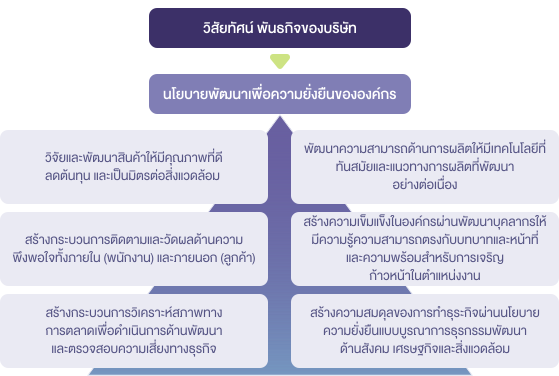
- Corporate Vision and Mission
- Corporate Sustainability Development Policy
The sustainability framework is driven through the following strategic directions:
- Conduct research and develop products with superior quality, cost efficiency, and environmental friendliness.
- Enhance manufacturing capabilities through advanced technology and continuously improve production processes.
- Foster a culture of innovation and positive attitudes among both internal stakeholders (employees) and external stakeholders (customers).
- Strengthen organizational capabilities by developing personnel with the knowledge and competencies required to support future business growth and expansion.
- Establish market analysis processes to support business development and business risk monitoring.
- Promote sustainable organizational growth through policies that integrate innovation development with social, economic, and environmental responsibility.
2. Corporate Governance Structure
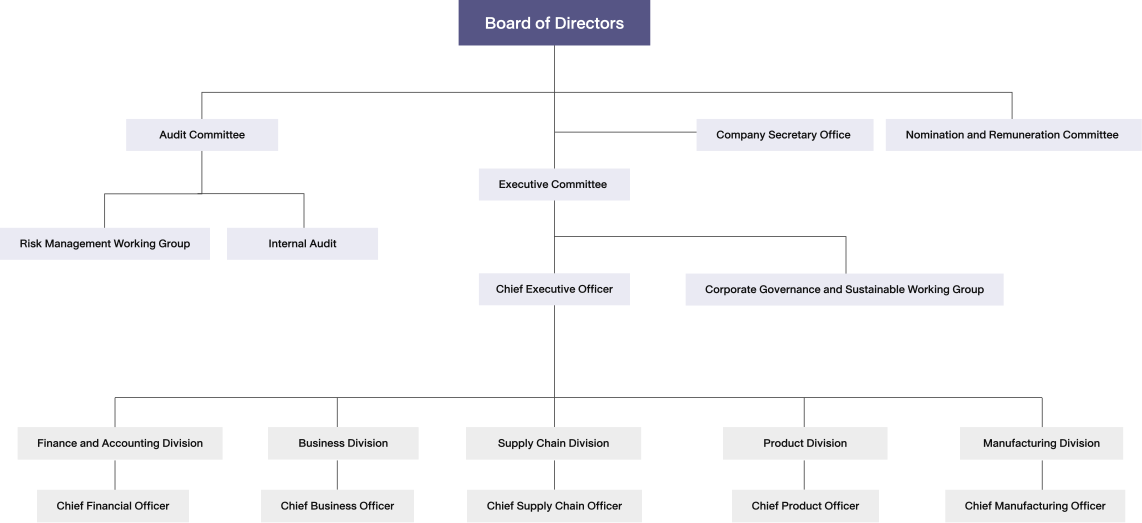

The Board of Directors is responsible for determining the Company’s direction, strategies, policies, and overseeing operations to ensure compliance with applicable laws, the Company’s objectives and articles of association, as well as the principles of good corporate governance for listed companies in accordance with the guidelines of the Stock Exchange of Thailand and the Securities and Exchange Commission of Thailand. The Board regularly monitors the Company’s operating performance and financial position and places importance on risk management, internal control, and the disclosure of accurate, complete, and timely information in order to build confidence among shareholders, investors, and stakeholders.
The Company requires that the Board of Directors consist of qualified directors possessing knowledge, capabilities, and experience appropriate to the nature of the business. Independent directors must account for no less than one-third of the total number of directors in order to maintain checks and balances and support independent and prudent decision-making. In addition, the Company clearly separates the roles of the Chairman of the Board and the Chief Executive Officer to ensure proper oversight and balance of authority in management and operations.

Subcommittees and Governance Mechanisms
To enhance the effectiveness of corporate governance, the Company has established several subcommittees, including the Audit Committee, the Nomination and Remuneration Committee, and the Executive Committee. Each committee has clearly defined authority, duties, and responsibilities in accordance with charters approved by the Board of Directors.
The Audit Committee is responsible for overseeing the adequacy of the internal control system, risk management processes, the accuracy of financial reporting, and compliance with applicable laws and regulations. Meanwhile, the Nomination and Remuneration Committee is responsible for selecting qualified individuals for directorships and senior executive positions, as well as determining appropriate remuneration that aligns with the Company’s performance.
In addition, the Company has established the Corporate Governance and Sustainability Working Committee to support the integration of governance, environmental, and social considerations into the Company’s business operations and decision-making processes. The committee regularly reports operational performance and material issues to the Executive Committee and the Board of Directors.

Corporate Governance and Sustainability Working Committee
Previously, the Corporate Governance and Sustainability Working Committee was known as the “Corporate Governance and Corporate Social Responsibility Working Committee.” The Board of Directors approved the renaming of the committee to the Corporate Governance and Sustainability Working Committee in recognition of the importance of corporate governance and with the understanding that good corporate governance contributes to the Company’s sustainable growth and enhances long-term value for both the Company and its shareholders. Accordingly, in order to strengthen the Company’s good corporate governance framework and support the advancement of corporate social, community, and environmental responsibility initiatives, as well as to establish a strong anti-corruption foundation, the Company deemed it appropriate to revise the committee’s name and responsibilities. The committee is responsible for considering, establishing, reviewing, and improving policies relating to corporate governance, business ethics and code of conduct, social responsibility, environmental and stakeholder policies for sustainable business operations and society as a whole, including anti-corruption policies and other related policies. The revised committee structure became effective on 25 February 2025.
In 2025, the Company also increased the number of members of the Corporate Governance and Sustainability Working Committee to ensure representation from employees across all departments, thereby enhancing the effectiveness of the committee’s operations and implementation.
In 2025, the Company increased the number of members of the Corporate Governance and Sustainability Working Committee to ensure representation from employees across all departments, thereby enhancing the effectiveness of the committee’s operations and implementation.
The current members of the committee are as follows:
- Mrs. Areerat Ulitsathit
Chairperson of the Working Committee / Chief Product Officer - Ms. Yupa Pangsrinon
Committee Member / Chief Business Officer - Ms. Pawita Horpaithoon
Committee Member/Sr. Marketing & Commercial Excellence Manager - Mr. Itthichai Pakkred
Committee Member / Employee Relations Supervisor - Ms. Somnuk Phumphol
Committee Member / Samut Prakan Plant Manager - Ms. Thamonwan Isariyawanich
Committee Member / Senior Purchasing Manager - Ms. Monrada Yamsri
Committee Member/Quality Management System Manager - Ms. Thunchanok Chawvavanich
Committee Member/Senior Company Secretary Office Supervisor - Ms. Nawaphorn Sakphutiwath
Committee Member and Secretary to the Working Committee

Corporate Governance Structure and ESG Roles
| Governance Body | Key Roles and Responsibilities | ESG Roles (Environmental, Social, Governance) |
|---|---|---|
| Board of Directors | Determines the Company’s direction, strategies, and oversees overall operations | Oversees sustainability policies and strategies; considers and monitors material ESG issues and ESG-related risks to ensure transparent, responsible, and sustainable business operations that create long-term value |
| Chairman of the Board | Leads and oversees the performance of the Board of Directors | Promotes corporate governance principles and business ethics; supports the integration of sustainability issues into Board-level oversight and establishes appropriate checks and balances |
| Audit Committee | Oversees the internal control system, risk management, and legal compliance | Oversees ESG risks, legal and ethical compliance, verification of sustainability-related information, and whistleblowing and complaint mechanisms to enhance transparency and credibility |
| Nomination and Remuneration Committee |
Responsible for the nomination, appointment, and remuneration of directors and executives | Promotes an appropriate governance structure; considers remuneration aligned with performance and sustainability objectives; supports diversity, fairness, and human capital development |
| Executive Committee | Manages operations and drives the Company’s strategic execution | Implements ESG policies and strategies into practice; monitors sustainability performance at the operational level and reports material issues to the Board of Directors |
| Corporate Governance and Sustainability Working Committee | Supports corporate governance and sustainability operations | Develops and monitors ESG plans; integrates ESG into business processes; coordinates internally across the organization; and reports sustainability performance to management and the Board |
| Risk Management Working Committee | Manages and monitors organizational risks | Identifies, assesses, and monitors ESG-related risks alongside business risks; integrates ESG risks into the enterprise risk management framework and reports to relevant committees |
| Chief Executive Officer (CEO) | Oversees overall management and drives organizational strategy | Drives sustainability policies into implementation; fosters a corporate culture of ethics and responsibility; monitors ESG performance and reports to the Board of Directors |
การประชุมของคณะกรรมการเพื่อขับเคลื่อนการกำกับดูแลกิจการและความยั่งยืน ปี 2568
| คณะกรรมการ/คณะทำงาน | สาระสำคัญ | ความถี่ในการประชุม (ครั้ง/ปี) |
|---|---|---|
| คณะกรรมการบริษัท | 1. อนุมัติแผนการบริหารความต่อเนื่องทางธุรกิจ (Business Contingency Plan: BCP) และรับทราบการแต่งตั้งคณะทำงาน BCP 2. อนุมัติเปลี่ยนชื่อคณะทำงานกำกับดูแลกิจการและความรับผิดชอบต่อสังคม (Corporate Governance and Corporate Social Responsibility: CG&CSR) เป็น คณะทำงานบรรษัทภิบาลและความยั่งยืน (Corporate Governance and Sustainable: CGS) และแต่งตั้งเลขานุการคณะทำงาน CGS 3. อนุมัติทบทวนแก้ไขกฎบัตร ขอบเขตอำนาจหน้าที่และความรับผิดชอบให้สอดคล้องกับการดำเนินการด้านความยั่งยืนของบริษัท 4. อนุมัตินโยบาย และคู่มือที่สำคัญของบริษัท เช่น (จรรยาบรรณและจริยธรรมทางธุรกิจ, นโยบายการรับ-ให้ของขวัญหรือประโยชน์อื่นใด, นโยบายด้านสิทธิมนุษยชนและการปฏิบัติต่อแรงงาน, คู่มือบรรษัทภิบาลของบริษัท ฯลฯ) 5. รับทราบรายงานติดตามผลการดำเนินงานความเสี่ยงองค์กร |
6 |
| คณะกรรมการตรวจสอบ | 1. พิจารณาแผนการบริหารความต่อเนื่องทางธุรกิจ (Business Contingency Plan: BCP) และรับทราบการแต่งตั้งคณะทำงาน BCP 2. เห็นชอบรายการระหว่างกันประจำปี 2567 สิ้นสุดวันที่ 31 ธันวาคม 2567 ของบริษัทและบริษัทย่อย 3. เห็นชอบงบการเงินผลการประเมินประสิทธิภาพความเพียงพอระบบการควบคุมภายใน 4. เห็นชอบแผนการตรวจสอบภายในประจำปี 2568 5. จารณาเห็นชอบนโยบาย และคู่มือที่สำคัญของบริษัท 6. รับทราบการติดตามผลการดำเนินงานความเสี่ยงองค์กร และการประเมินความเสี่ยงองค์กร 7. พิจารณารายการเกี่ยวโยงกัน 8. ให้ความเห็นชอบงบการเงินของบริษัทและบริษัทย่อย 9. พิจารณาเห็นชอบขอบเขตกฎบัตรและนโยบายต่างๆ ของบริษัท |
6 |
| คณะกรรมการสรรหาและพิจารณาค่าตอบแทน | 1. เห็นชอบหลักเกณฑ์ค่าตอบแทนและผลประโยชน์ตอบแทนของผู้บริหารและพนักงานของบริษัท ประจำปี 2567 และ 2568 2. เห็นชอบแผนสืบทอดตำแหน่ง (Succession Planning) ปี 2568 3. รับทราบรายงานประเมินผลด้านจริยธรรมของผู้บริหารและพนักงาน ประจำปี 2567 |
3 |
| คณะทำงานบริหารความเสี่ยง | 1. เห็นชอบการติดตามผลประเมินความเสี่ยงภายในองค์กร ประจำปี 2568 2. เห็นชอบร่างแผนการบริหารความต่อเนื่องทางธุรกิจ 3. เห็นชอบร่างงานประเมินความเสี่ยงภายในองค์กรประจำปี 2568 4. เห็นชอบรายชื่อคณะทำงานบริหารความเสี่ยง (ชุดย่อย) ประจำปี 2568 5. รับทราบนโยบายการบริหารความเสี่ยงประจำปี 2568 6. ให้ความเห็นการติดตามแผนงานนำเสนอผลิตภัณฑ์ใหม่เพื่อเตรียมความพร้อมในการปรับเปลี่ยนผลิตภัณฑ์ใหม่ตามที่กฎหมายไม่มีคับใช้ 7. รับทราบความเสี่ยงจากเหตุการณ์แนวโน้มใหม่ 8. ติดตามความคืบหน้าการดำเนินงานการวัดระดับน้ำเพื่อป้องกันน้ำท่วม 9. ติดตามความคืบหน้าการจัดทำแผนความเสี่ยงจากเหตุการณ์ฉุกเฉินหรือภัยพิบัติต่างๆ 10. อนุมัติการกำหนดคุณสมบัติที่อาจส่งผลต่อการดำเนินงานและมอบหมายต่อบริษัทและบทบาทหน้าที่ของฝ่ายบริหาร 11. อนุมัตินโยบายหน้าที่และขั้นตอนการปฏิบัติเมื่อเกิดคุณภาพที่อาจส่งผลต่อการดำเนินงาน 12. อนุมัติกำหนดแผนทดสอบเมื่อเกิดคุณภาพที่อาจส่งผลต่อการดำเนินงาน |
4 |
| คณะทำงานกำกับดูแลกิจการและความยั่งยืน | 1. อนุมัติแต่งตั้งคณะทำงานด้านสิทธิมนุษยชนและการปฏิบัติต่อแรงงาน 2. รับทราบความคืบหน้า SBTI 3. รับทราบประเด็นความยั่งยืนของบริษัทฯ 4. พิจารณาตัวชี้วัดและเป้าหมายด้าน ESG ประจำปี 2569 5. เสนอทบทวนกฎบัตรคณะกรรมการ คณะกรรมการชุดย่อย, ขอบเขตอำนาจหน้าที่ และความรับผิดชอบฯ และนโยบายต่าง ๆ ของบริษัทฯ 6. เห็นชอบแผนการดำเนินงาน CGS ปี 2569 7. เห็นชอบงบประมาณกิจกรรม CSR ปี 2569 |
5 |
| คณะกรรมการความปลอดภัยอาชีวอนามัยและสภาพแวดล้อมในการทำงาน | 1. ทบทวนบทบาทหน้าที่ของคณะกรรมการความปลอดภัยครบถ้วนตามกฎหมาย 12 ประการ 2. ติดตามและสรุปกฎหมายด้านความปลอดภัย อาชีวอนามัย และสิ่งแวดล้อมที่ประกาศใหม่ในปี 2025 รวม 10 ฉบับ 3. จัดทำและดำเนินมาตรการอนุรักษ์การได้ยินแบบครบวงจร 4. จัดทำคู่มือความปลอดภัยประจำปี 2025 ในรูปแบบ E-book 5. เน้นย้ำมาตรการความปลอดภัยด้านไฟฟ้า เครื่องจักร ไฟฟ้าสถิตและการทำงานในที่อับอากาศ 6. ส่งเสริมวัฒนธรรมการรายงานเพื่อป้องกันอุบัติเหตุเชิงรุก |
12 |

3. Corporate Governance and Business Ethics Policies

The Company recognizes the importance of good corporate governance as a fundamental foundation for sustainable business operations. The Company adheres to the principles of transparency, accountability, fairness, and integrity in conducting its business. Accordingly, the Company has established corporate governance and business ethics policies to serve as a framework for decision-making, business operations, and the conduct of directors, executives, and employees at all levels, ensuring compliance with applicable laws, regulations, rules, and relevant standards, as well as alignment with international corporate governance best practices.
Under its good corporate governance policy, the Company emphasizes the establishment of an appropriate governance structure with clearly defined roles, duties, and responsibilities in order to create effective checks and balances and oversight mechanisms. The Board of Directors is responsible for setting policies, overseeing operations, and monitoring management performance while considering the best interests of the Company, shareholders, and all stakeholder groups over the long term.
The Company places importance on conducting business fairly and transparently. The Company has established policies governing connected transactions and related-party transactions in order to prevent conflicts of interest and ensure that such transactions are conducted on an arm’s-length basis, are reasonable, and do not cause damage to the Company or its shareholders. The consideration and approval of related-party transactions are conducted in accordance with established procedures and are subject to strict oversight by the Board of Directors and the Audit Committee.
In addition, the Company has established policies on conflicts of interest and disclosure of interests to ensure that directors, executives, and related persons perform their duties with integrity and do not seek personal gain or benefits for related parties arising from their positions within the Company. Relevant persons are required to disclose any interests that may give rise to conflicts of interest completely, accurately, and in a timely manner so that the Company can appropriately manage such risks.

The Company recognizes the importance of insider information protection and investor confidence. Therefore, the Company has established a policy governing the use of inside information to prevent the misuse of confidential information, including insider trading. The policy clearly defines guidelines for the preservation, use, and disclosure of information, and requires directors, executives, and relevant employees to strictly comply with applicable laws and regulatory requirements.
With respect to personal data protection, the Company has implemented a personal data protection policy in compliance with applicable laws. The policy establishes principles for the collection, use, disclosure, and safeguarding of personal data belonging to employees, customers, suppliers, and stakeholders in order to protect the rights and privacy of data owners and reduce legal and reputational risks to the organization.
At the same time, the Company has established a Code of Conduct and Business Ethics as guidelines for the conduct of directors, executives, and employees. The code covers integrity, legal compliance, respect for human rights, fair treatment of stakeholders, anti-corruption practices, and responsible business conduct toward society and the environment. The Company continuously communicates and promotes awareness of the Code of Conduct among personnel at all levels in order to cultivate an organizational culture founded on ethics and responsibility.

The Company believes that good corporate governance and ethical business practices are essential factors in building confidence among shareholders, investors, and stakeholders, and serve as a foundation supporting stable, transparent, and sustainable business growth in the long term.
To further strengthen corporate governance and business ethics in alignment with the evolving business environment and international best practices, the Company places importance on continuously reviewing and improving its policies, practices, and governance mechanisms. The Company focuses on reinforcing preventive governance, governance risk management, and promoting an organizational culture based on transparency, accountability, and ethics at all levels of the organization.
In addition, the Company seeks to systematically integrate ethics and transparency governance into its decision-making and operational processes. The Company emphasizes the roles of the Board of Directors and management in overseeing, monitoring, and evaluating the effectiveness of governance practices, as well as communicating ethical principles and corporate values to employees, suppliers, and stakeholders throughout the value chain in order to strengthen trust and support the organization’s long-term sustainability.
4. Anti-Corruption

The Company places great importance on conducting business with integrity, transparency, and adherence to ethical principles. The Company does not tolerate corruption in any form, whether direct or indirect. Accordingly, the Company has established an Anti-Corruption Policy to serve as a framework for directors, executives, employees, and persons associated with the Company’s business operations to ensure compliance with applicable laws, regulations, ethical standards, and international best practices.
Under this policy, directors, executives, and employees at all levels are prohibited from requesting, accepting, offering, or giving bribes, assets, or any other inappropriate benefits, whether directly or indirectly, for personal gain or improper business advantage. The policy covers business dealings with government agencies, private sector entities, suppliers, customers, and other stakeholders. The Company emphasizes transparent and verifiable operations while upholding the best interests of the organization.
The Company has established clear guidelines regarding the giving and receiving of gifts, hospitality, and other benefits in order to prevent corruption risks and conflicts of interest. Such activities must comply with appropriate criteria, remain within prescribed value limits, and must not influence business decisions or result in unfair treatment. Procedures for reporting and obtaining approval in cases involving potential risks or inappropriate circumstances are also clearly defined.
In addition, the Company places importance on safeguarding corporate assets and respecting intellectual property rights. Personnel are required to use the Company’s assets and resources efficiently, honestly, and solely for the benefit of the organization. Employees are prohibited from engaging in any acts that seek improper personal benefits or cause damage to the Company, as such actions are considered part of corruption and misconduct prevention measures.

To promote a corporate culture of transparency and accountability, the Company has established whistleblowing and complaint-handling policies regarding misconduct and corruption. Employees and stakeholders are encouraged to report information or complaints concerning corruption, legal violations, or non-compliance with Company policies through designated confidential and secure channels. The Company provides appropriate protection to whistleblowers and conducts investigations fairly, transparently, and independently.
The Company has also clearly defined the roles, duties, and responsibilities of the Board of Directors, management, and relevant departments in overseeing, monitoring, and reviewing compliance with the Anti-Corruption Policy, including disciplinary actions and legal measures in cases where violations are identified. This is intended to ensure that the policy is effectively implemented and strictly enforced.
The Company believes that systematic and continuous anti-corruption efforts will strengthen confidence among shareholders, investors, and stakeholders, while supporting transparent, fair, and sustainable business operations in the long term.

The Company is committed to strengthening anti-corruption practices as an integral part of its corporate governance system. The Company emphasizes the roles of the Board of Directors and management in regularly overseeing, monitoring, and evaluating the effectiveness of anti-corruption policies and practices to ensure that business operations remain transparent, accountable, and aligned with international ethical and governance standards.
At the same time, the Company strives to cultivate an organizational culture that does not tolerate corruption in any form by integrating principles of integrity and transparency into decision-making processes, operations, and relationships with stakeholders throughout the value chain. The Company believes that systematic and continuous anti-corruption efforts are fundamental to strengthening confidence among shareholders, investors, and society, and are a key foundation for sustainable long-term growth.
Whistleblowing and Complaint Handling System
The Company places importance on promoting transparent, accountable, and ethical corporate governance. The Company recognizes that an effective whistleblowing and complaint handling system is an important mechanism for preventing and detecting inappropriate conduct, corruption, violations of laws, regulations, Company rules, or the Company’s Code of Business Ethics. Accordingly, the Company has established a Whistleblowing and Complaint Handling Policy to provide employees and all stakeholder groups with appropriate and secure channels for reporting information or submitting complaints.
Under this policy, the Company defines the scope of complaints to cover significant issues, including actions that may violate laws or Company regulations, corruption, conduct contrary to business ethics principles, conflicts of interest, inaccurate financial reporting, and any other actions that may cause damage to the Company, shareholders, or stakeholders.
The Company has established multiple accessible whistleblowing and complaint channels, allowing whistleblowers to choose the most appropriate reporting method, including written submissions, reporting through designated Company channels, or reporting directly to authorized departments or designated individuals. The Company strictly safeguards the confidentiality of whistleblowers and all related complaint information in order to prevent any potential adverse impacts on the reporting parties.
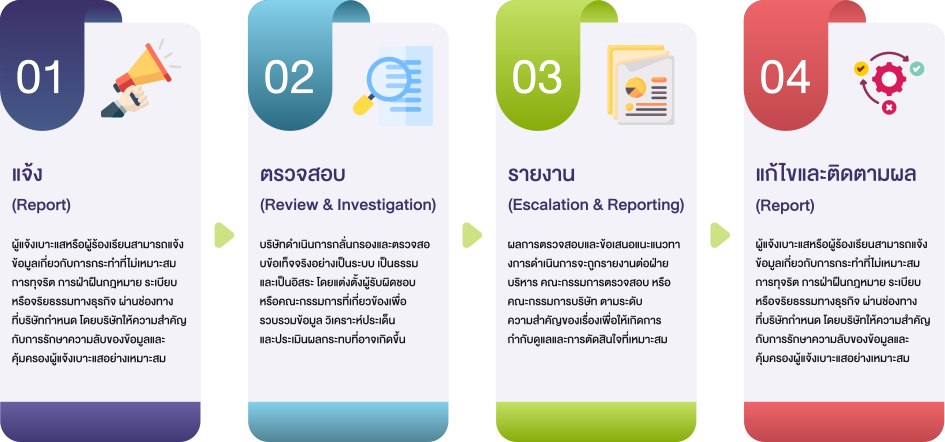
Upon receiving a whistleblowing report or complaint, the Company will conduct a systematic, fair, and independent investigation process by appointing responsible persons or relevant committees to review the facts, analyze the issues, and determine appropriate corrective actions. The investigation results and proposed actions will be reported to the Board of Directors or relevant committees according to the significance of the matter to ensure appropriate oversight and follow-up.
The Company protects whistleblowers and complainants from retaliation, punishment, or unfair treatment arising from good-faith reporting. Disciplinary actions and legal measures will be implemented in cases where misconduct is identified to ensure that the whistleblowing and complaint handling system remains effective and fosters confidence among employees and stakeholders in appropriately exercising their rights to report concerns.
The Company is committed to continuously improving its whistleblowing and complaint handling system as part of a strong corporate governance framework. The Company emphasizes the roles of the Board of Directors and management in supervising, monitoring, and regularly assessing the effectiveness of the system to ensure that ethical and governance-related issues can be prevented, detected, and addressed in a timely, transparent, and fair manner.
In 2025, the Company received no complaints through its whistleblowing and complaint handling channels available to external parties and Company personnel. In addition, the Company regularly conducts assessments of corruption risks, non-compliance with regulations, and violations of the Code of Conduct by operational personnel (First Line). The Internal Audit Department is responsible for evaluating the effectiveness and efficiency of the risk assessment and internal control processes and reporting the results to the Audit Committee.
At the same time, the Company strives to cultivate an organizational culture that encourages open communication and good-faith reporting by integrating the principles of transparency, accountability, and whistleblower protection into operations at all levels of the organization. The Company believes that an effective whistleblowing and complaint handling system helps strengthen the confidence of shareholders, investors, and stakeholders, while serving as an important mechanism supporting the Company’s sustainable growth in the long term.

Risk Management and Internal Control
The Company recognizes risk management and internal control as essential components of good corporate governance and as key mechanisms supporting stable, transparent, and sustainable business operations. The Board of Directors has approved the Risk Management Policy and established risk management as a shared responsibility of executives and employees at all levels to ensure that risks which may affect the achievement of the Company’s objectives and goals are appropriately identified, assessed, and managed.
The Company has established a Risk Management Working Committee to support the Board of Directors in defining the framework, guidelines, and processes for enterprise risk management. The framework covers all dimensions of risk, including strategic risk, operational risk, financial risk, compliance risk, fraud risk, and sustainability risks (Environmental, Social, and Governance: ESG). The Company also defines its Risk Appetite and utilizes risk management tools such as Risk Maps and Key Risk Indicators (KRIs) to support decision-making and proactive risk management.
The Company’s risk management process follows a systematic approach, beginning with the establishment of policies and objectives, followed by risk identification and assessment, determination of appropriate risk treatment measures—such as risk acceptance, reduction, avoidance, or transfer—and ongoing monitoring and reporting to the Risk Management Working Committee, the Audit Committee, and the Board of Directors respectively. This process ensures that risks are appropriately managed and maintained within acceptable levels.
In terms of internal control, the Company has established a comprehensive and adequate internal control system to support the achievement of organizational objectives, safeguard Company assets, and ensure the accuracy and reliability of financial and non-financial reporting. The Board of Directors has assigned the Internal Audit Department to assess the adequacy and effectiveness of the internal control system based on the COSO Internal Control – Integrated Framework, which covers five key components: control environment, risk assessment, control activities, information and communication, and monitoring activities.
The Company’s Internal Audit Department operates independently and reports directly to the Audit Committee. Its responsibilities include reviewing and evaluating the effectiveness of the internal control system, risk management processes, and compliance with applicable laws, regulations, and Company policies, as well as monitoring corrective actions implemented in response to audit findings to support continuous operational improvement.
Based on the assessment of the adequacy of the risk management and internal control systems, the Board of Directors is of the opinion that the Company has appropriate and adequate risk management and internal control systems capable of supporting business operations under changing circumstances and promoting stable and sustainable organizational growth.
The Company is committed to continuously strengthening risk management and internal control as integral parts of an effective corporate governance framework. The Company emphasizes the roles of the Board of Directors, the Audit Committee, and management in supervising, monitoring, and regularly evaluating the effectiveness of these systems to ensure that they can comprehensively address both existing and emerging risks, including ESG-related risks.
At the same time, the Company seeks to integrate risk management and internal control into strategic decision-making and operational processes across all levels of the organization by promoting a culture of risk awareness, transparency, and accountability. The Company believes that continuously improving risk management and internal control systems will strengthen the confidence of shareholders, investors, and stakeholders and serve as a key foundation for sustainable long-term growth.

Disclosure and Transparency
The Company recognizes disclosure and transparency as fundamental principles of good corporate governance and essential factors in building confidence among shareholders, investors, and all stakeholder groups. The Company is committed to disclosing material information accurately, completely, adequately, timely, and fairly in compliance with applicable laws, regulations, and requirements of relevant regulatory authorities, as well as recognized corporate governance best practices.
The Board of Directors plays an important role in overseeing the Company’s disclosure practices to ensure that disclosures are appropriate, transparent, and verifiable. The Board establishes disclosure policies and practices in accordance with the requirements of the Stock Exchange of Thailand, the Securities and Exchange Commission of Thailand, and relevant international standards. In this regard, the Audit Committee is responsible for overseeing the quality, accuracy, and reliability of both financial and non-financial information to ensure that disclosed information does not mislead users of such information.
The Company has established a disclosure policy to define principles and guidelines for the disclosure of material information, covering both publicly disclosed information and non-public information. The policy is based on the principles of fair disclosure and the prevention of inappropriate use of inside information. The Company also establishes guidelines for the disclosure of forward-looking information with due care, prudence, and based on reasonable assumptions and supporting information.
In terms of financial reporting, the Company places great importance on accuracy, completeness, and timeliness. The Company has established systems and processes for preparing and submitting financial statements in accordance with applicable financial reporting standards. Such financial statements are reviewed by the Audit Committee before being submitted to the Board of Directors for approval. In addition, the Company has implemented appropriate controls over the disclosure of financial information and other information that may affect shareholders’ investment decisions.
The Company also recognizes the important role of the Company Secretary in supporting governance relating to disclosure practices. The Company Secretary acts as a coordinator between the Board of Directors, management, and regulatory authorities, and ensures that information disclosure, report preparation, and communication with shareholders and stakeholders are conducted accurately and in compliance with applicable laws and relevant practices.
With respect to investor relations, the Company has established an Investor Relations Code of Conduct as a guideline for communicating information to shareholders, investors, analysts, and the public in a fair, transparent, and equitable manner. The Company aims to promote accurate understanding of its operating performance, financial position, and business direction, while strengthening long-term relationships and confidence among investors and stakeholders.

Disclosure Governance Flow
| Governance Level | Key Responsibilities | Role in Disclosure and Transparency |
|---|---|---|
| Board of Directors | Establishes policies and oversees the overall corporate governance framework | Establishes disclosure policies and oversees transparent, accurate, complete, and compliant disclosure practices in accordance with applicable laws and international best practices, including reviewing material information that may affect shareholders’ decision-making |
| Audit Committee (AC) | Oversees financial reporting, internal controls, and legal compliance | Reviews the accuracy, completeness, and reliability of financial and non-financial information, monitors disclosure processes, and reports observations and recommendations to the Board of Directors |
| Management | Manages and implements operations in accordance with Company policies | Prepares, compiles, and verifies information to be disclosed to ensure accuracy, timeliness, and compliance with disclosure policies, including appropriate management of inside information and material information |
| Investor Relations / Company Secretary | Communicates and coordinates with shareholders and regulatory authorities | Discloses and communicates information to shareholders, investors, analysts, and the public in a fair, equitable, and transparent manner, including coordinating disclosure activities in compliance with Stock Exchange and regulatory requirements |
The Company believes that effective disclosure and transparency strengthen good corporate governance, reduce reputational risks, and support stakeholder decision-making based on accurate and complete information.
The Company is committed to enhancing disclosure and transparency as an integral part of its corporate governance framework by emphasizing the roles of the Board of Directors, the Audit Committee, and management in supervising, monitoring, and regularly evaluating the effectiveness of disclosure policies and practices. This is to ensure that disclosed information is accurate, reliable, and aligned with stakeholder expectations and international standards.
At the same time, the Company strives to integrate the principles of transparency, accountability, and fairness into decision-making processes and information communication across all levels of the organization. The Company believes that high-quality and continuously improved disclosure practices will strengthen the confidence of shareholders, investors, and the capital market, while serving as a key foundation for sustainable long-term growth.
Continuous Improvement and Enhancement of Corporate Governance

The Company places great importance on the continuous development and enhancement of corporate governance by adopting the principle of continuous improvement to ensure that its governance framework remains appropriate, modern, and capable of responding to changes in the business environment, regulations, and stakeholder expectations over the long term. Corporate governance is therefore not limited to mere compliance with laws or minimum requirements, but is regarded as a systematic process of qualitative improvement.
The Company regularly reviews its corporate governance policies, ethics-related policies, risk management policies, internal control policies, and sustainability policies on an annual basis or whenever significant changes occur. This is to ensure that governance practices remain aligned with current circumstances, competitive conditions, and business directions. Such reviews are conducted under the supervision of the Board of Directors and supported by relevant subcommittees and working committees to ensure that governance policies and mechanisms can be implemented effectively.
In enhancing corporate governance standards, the Company places importance on aligning with international best practices and governance and sustainability assessment frameworks established by external organizations, such as the Corporate Governance Report of Thai Listed Companies (CGR), participation in the Thai Private Sector Collective Action Against Corruption (CAC), and assessments based on FTSE Russell criteria. The Company uses assessment results, recommendations, and evolving trends from these frameworks as inputs for improving governance policies, structures, and processes to strengthen confidence among shareholders, investors, and all stakeholder groups.
In addition, the Company seeks to prepare for future expectations relating to transparency, social and environmental responsibility, and emerging risk management by integrating governance and sustainability considerations into strategic planning, decision-making, and operations at all organizational levels. The Company also promotes the roles of the Board of Directors and management in supervising, monitoring, and regularly evaluating governance performance to ensure that the Company can adapt and achieve stable and sustainable growth.
The Company is committed to strengthening corporate governance as a dynamic system capable of continuous improvement by emphasizing the role of the Board of Directors in overseeing, monitoring, and evaluating the effectiveness of governance structures, policies, and mechanisms on a regular basis. This is to ensure that the governance system can effectively address evolving risks, opportunities, and challenges, including ESG issues that are material to the Company’s long-term business operations.
At the same time, the Company strives to integrate the principles of good corporate governance, transparency, and accountability into strategic decision-making and operational processes across all levels of the organization. The Company believes that the continuous development and enhancement of corporate governance will strengthen the confidence of shareholders, investors, and stakeholders, and serve as a key foundation for sustainable value creation and long-term growth.