
Environmental Sustainability Management
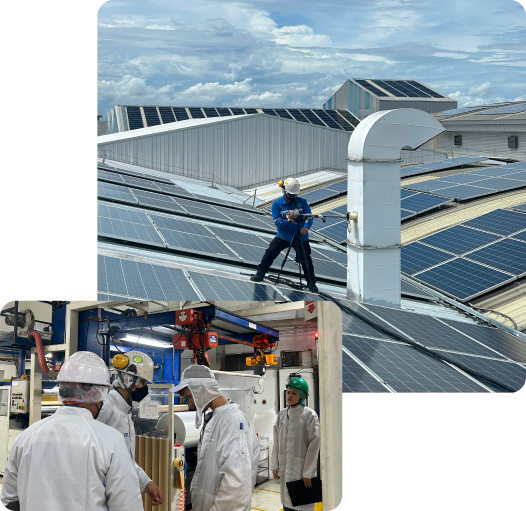
Unique Plastic Industry Public Company Limited and its subsidiaries recognize the importance of conducting business alongside responsible environmental stewardship. The Company is committed to minimizing environmental impacts that may arise throughout its value chain operations, while promoting efficient resource utilization and strict compliance with applicable laws, regulations, and related requirements.
The Company’s environmental management is implemented under its Sustainability Policy and Environmental Policy framework, which is overseen at the executive management level. Clear roles, responsibilities, accountability, and control processes have been established to ensure that environmental operations are carried out systematically, transparently, and in a manner that supports continuous improvement.
Environmental Governance Approach and Management System
The Company has implemented environmental management systems to control and mitigate operational environmental impacts and has obtained relevant international certifications, including the ISO 14001 Environmental Management System and ISO 50001 Energy Management System certifications. In addition, the Company has achieved a high-level Green Industry certification, reflecting its strong commitment to environmental management practices. Accordingly, the Company and its subsidiaries have obtained the following environmental management certifications:
- The Company has been certified for its Environmental Management System in accordance with ISO 14001:2015 by SGS (Thailand) Limited.
- UPI-M has been certified for its Environmental Management System in accordance with ISO 14001:2015 by the Management System Certification Institute (Thailand) (MASCI).
- The Company has been certified for its Energy Management System in accordance with ISO 50001:2018 by MASCI.
- The Company has received Carbon Footprint for Organization certification from the Thailand Gas Management Organization (Public Organization).
- The Company has been certified for compliance with environmental and sustainability requirements for bio-based and circular raw materials within the supply chain under the International Sustainability and Carbon Certification (ISCC) scheme by SGS Germany GmbH.
- The Company has been certified as a “Green Industry Level 5” organization by the Ministry of Industry.
The Company has established manuals, operational regulations, and work procedures related to environmental management in key areas such as wastewater management, pollution control, waste management, and hazardous chemical control. These measures are implemented to ensure that operations across all departments are conducted consistently and in compliance with applicable laws, regulations, and relevant standards.
In addition to environmental audits conducted by external organizations, the Company also regularly monitors, evaluates, and reviews its environmental performance. Annual environmental assessments are carried out in various areas, including water quality and air quality analyses conducted by Envi Care Monitoring Co., Ltd. These assessments enable the Company to maintain comprehensive environmental data and promptly improve or resolve any issues arising from operational processes. Furthermore, the Company has established objectives to provide employees with training and awareness programs on reducing production waste in order to minimize waste that may adversely affect the environment. Since its establishment to the present, the Company has never been subject to lawsuits or complaints from neighboring communities regarding environmental issues.
Furthermore, the Company has formally established policies and guidelines related to Environmental, Social, and Governance (ESG) management, covering corporate social and environmental responsibility policies, good corporate governance policies, and the Company’s code of business conduct. These policies have been approved by the Board of Directors and communicated through training and awareness programs to executives, employees, and relevant stakeholders, serving as a framework for conducting business transparently, responsibly, and with due consideration of environmental impacts throughout the value chain.
Energy Efficiency and Renewable Energy Promotion
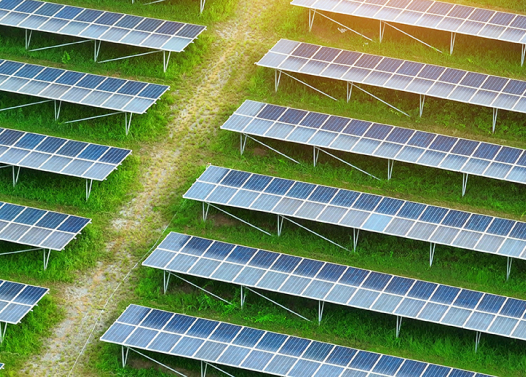
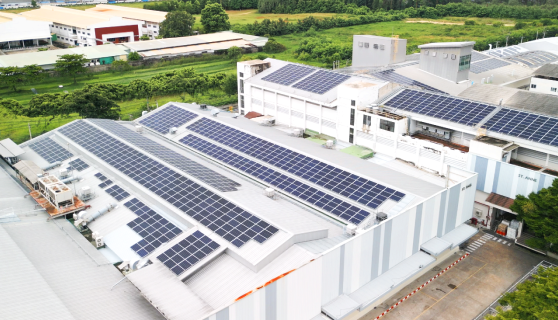
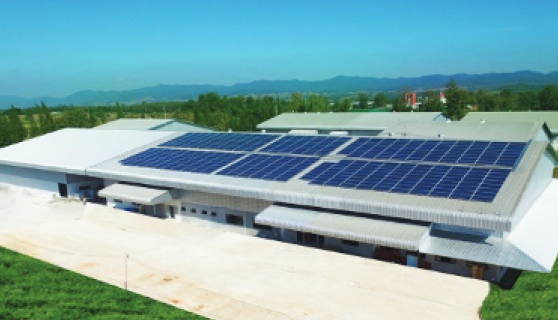
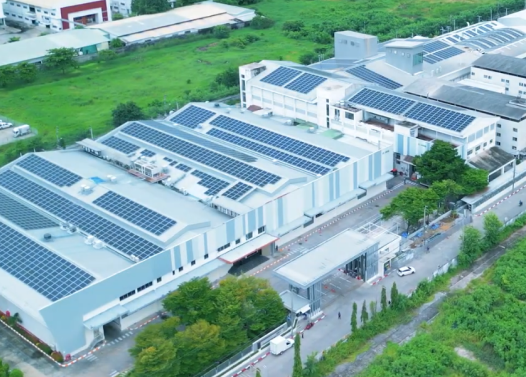
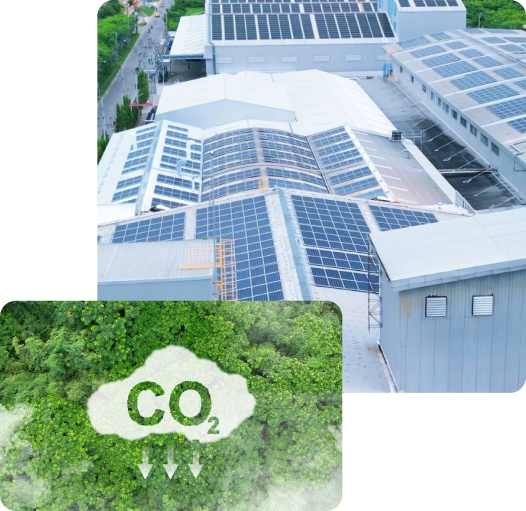
The Company and its subsidiaries recognize that energy is a key factor affecting production efficiency, operating costs, and long-term environmental impacts. Therefore, the Company places significant emphasis on efficient energy management alongside increasing the proportion of renewable energy consumption in order to support sustainable business operations and mitigate climate change impacts. With the objective of becoming a green organization, the Company has adopted solar energy as an alternative energy source for internal consumption through the installation of Solar Rooftop systems at its factories in Samut Prakan and Tak provinces.
In 2025, the Solar Rooftop systems of the Company and its subsidiaries generated a total of 2,846 megawatt-hours of electricity per year, contributing to energy savings and reductions in electricity costs while also supporting environmental preservation. The systems helped reduce greenhouse gas emissions equivalent to no less than 1,704 tons of carbon dioxide emissions per year.
Electricity Generation Statistics from Solar Rooftop Systems
| Electricity Generation Statistics | 2023 | 2024 | 2025 |
|---|---|---|---|
| Operated by UNIX (MWh) | 1,344 | 2,087 | 2,514 |
| Operated by UPI-M (MWh) | 359 | 346 | 332 |
| Total Electricity Generated (MWh) | 1,703 | 2,433 | 2,846 |
| Equivalent CO₂ Emission Reduction (tons/year) | 1,019 | 1,456 | 1,704 |
The investment in the Solar Rooftop system forms part of the Company’s strategy to improve energy efficiency and reduce dependence on fossil fuel-based energy sources. This initiative helps mitigate long-term energy cost risks and supports the Company’s greenhouse gas emission reduction targets.
In addition, the Company and its subsidiaries place strong emphasis on systematic and efficient energy management by continuously implementing energy conservation measures. These initiatives cover improvements in machinery efficiency, production processes, and utility systems within the factories, as well as the adoption of energy technologies and innovations to reduce electricity consumption, minimize system losses, and enhance operational stability. In 2025, the Company implemented a total of 13 key energy conservation measures, which can be categorized into three main groups as follows:
- Replacement of old machinery with new energy-efficient machines to reduce electricity consumption.
- Improvement and replacement of worn-out extruder screw components with new parts to reduce energy loss, increase production capacity, and improve machinery efficiency.
- Enhancement of machine operation efficiency by changing machine operation management from Standby Mode to 100% Shutdown Mode when not in use.
- Installation and replacement of machinery cooling systems from high-energy-consuming chillers to low-energy plate heat exchanger systems to reduce energy costs and improve production efficiency.
- Improvement of air-conditioning system performance through enhanced operational efficiency and optimized energy control according to workload requirements.
- Replacement of conventional air-conditioning units with inverter-type systems to improve long-term energy efficiency.
- Improvement of building ventilation systems by replacing motors with high-efficiency models to reduce energy losses.
- Upgrading factory lighting systems by replacing conventional lighting with LED technology to reduce electricity consumption and extend service life.
- Replacement of cooling tower fan motors with high-efficiency motors to reduce electricity consumption and improve cooling performance.
- Replacement of power transformers with Super Low Loss transformers to minimize energy losses in the electricity distribution system.
- Replacement of air dryers with high-efficiency units to reduce energy losses in compressed air systems.
- Installation and implementation of the SAM (Sigma Air Management System), an intelligent air compressor management and control system, for continuous monitoring, control, and analysis of electricity consumption.
- Adoption of the Hybrid Current Energy system to reduce electrical energy losses and improve electrical system efficiency.
- Installation of Harmonic Filters to improve power quality, reduce the impact of excessive harmonic values, and extend the service life of electrical equipment.
These energy conservation measures have contributed significantly to reducing electricity consumption, lowering operating costs, and supporting the Company’s environmental sustainability goals in a tangible manner.
Statistics of Energy Saving Projects of the Company and Its Subsidiaries
| Electricity Saving Project Statistics | 2023 | 2024 | 2025 |
|---|---|---|---|
| Operated by UNIX (MWh) | 430 | 1,439 | 842 |
| Operated by UPI-M (MWh) | 27 | 96 | 55 |
| Total Electricity Savings (MWh) | 457 | 1,535 | 897 |
| Equivalent CO₂ Emission Reduction (tons/year) | 274 | 919 | 537 |
Through these energy management initiatives, the Company and its subsidiaries have continuously improved energy efficiency, reduced electricity consumption, and lowered operating costs, while simultaneously minimizing environmental impacts and greenhouse gas emissions. The Company remains committed to further developing and expanding its energy conservation measures, as well as increasing the use of renewable energy, in order to support sustainable long-term business growth.
Through these energy management initiatives, the Company and its subsidiaries have continuously improved energy efficiency, reduced electricity consumption, and lowered operating costs, while simultaneously minimizing environmental impacts and greenhouse gas emissions. The Company remains committed to further developing and expanding its energy conservation measures, as well as increasing the use of renewable energy, in order to support sustainable long-term business growth.
Water Resource Management
The Company recognizes the importance of responsible water consumption, considering water to be a critical resource for both production processes and all stakeholder groups. The Company’s water management operations are conducted under its Eco Factory policy, which emphasizes efficient water utilization, reduction of water consumption from municipal water sources, and prevention of unnecessary water loss.
Within the production process, the Company reuses condensate water generated from air-conditioning systems for circulation within the factory at a volume exceeding 10,000 liters per day in order to reduce municipal water consumption. In addition, the Company has established regular inspection and maintenance systems for water pipelines to prevent leakage and unnecessary water loss.
The Company also places strong emphasis on wastewater management by operating standardized wastewater treatment systems prior to discharging wastewater outside the factory premises. Wastewater quality is monitored regularly. The latest wastewater quality assessment conducted on 16 September 2025 indicated that all post-treatment parameters were within the legal standards prescribed by applicable regulations, as shown in the following table.
Wastewater Quality Discharged Outside the Factory
| Monitored Parameters | Unit | Test Method1/ | Wastewater Test Results | Standard Value2/ | |
|---|---|---|---|---|---|
| Before Treatment | After Treatment | ||||
| pH | - | SM 2017 (4500-H+ B) | 6.9 | 7.2 | 5.5 - 9.0 |
| BOD | mg/L | SM 2017 (5210 B, 4500-O G) | 31 | 19 | < 20 |
| COD | mg/L | SM 2017 (4500-H+ B) | 170 | 73 | < 120 |
| Color (at the original pH) | ADMI | SM 2017 (5220 F) | 11 | 6 | < 300 |
| Color (at pH 7) | ADMI | SM 2017 (5220 F) | 11 | 6 | < 300 |
| Total Suspended Solids | mg/L | SM 2017 (5220 D) | 110 | 19 | < 50 |
| Total Dissolved Solids | mg/L | SM 2017 (5220 C) | 280 | 360 | < 3,000 |
| Oil & Grease | mg/L | SM 2017 (5220 D) | 8.1 | < 3.0 | < 5 |
| Sample Condition | Observation | Light grey and turbid | Light yellow with suspended solids |
||
2/ Referenced from the Ministry of Industry Notification on Industrial Effluent Discharge Standards B.E. 2560 (2017).
The above monitoring results reflect the effectiveness of the Company’s wastewater treatment system and its strict compliance with environmental regulations and requirements.
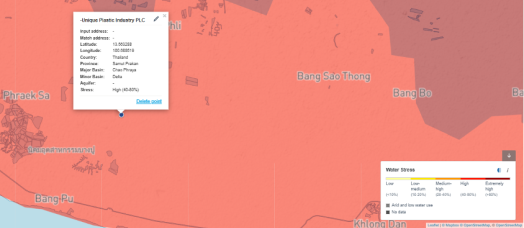
The factory of Unique Plastic Industry Public Company Limited is located in Phraeksa Mai Subdistrict, Samut Prakan Province, an industrial and densely populated suburban area situated in the lower Chao Phraya River Basin. According to the WRI Aqueduct – Baseline Water Stress assessment framework, the area is classified as a High Water Stress zone, reflecting competition for water usage among industrial, community, and agricultural sectors, particularly during the dry season.
The Company recognizes that operating in a water-stressed area may pose risks to business continuity if not managed appropriately. Therefore, the Company places strong emphasis on efficient water utilization, water reuse, and wastewater quality control in order to support sustainable business operations and minimize impacts on local water resources.
Unique Plastic Industry Public Company Limited places significant importance on the systematic, transparent, and traceable management of waste and operational waste generated from its business activities. The Company adheres to the principles of sustainable development alongside compliance with applicable environmental laws and regulations. The Company focuses on waste reduction at the source, efficient resource utilization, and maximizing waste recovery and reuse in order to minimize environmental impacts and support the Circular Economy concept.
The contents of this section have been prepared for disclosure in the Company’s One Report in accordance with the guidelines of the Stock Exchange of Thailand and aligned with the international reporting framework GRI 306 (Waste).
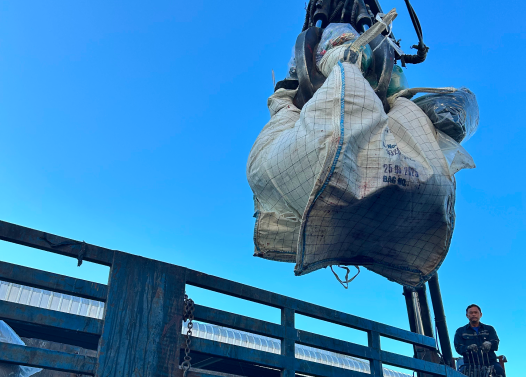
The Company manages waste in accordance with the 3Rs principles: Reduce, Reuse, and Recycle. Waste management begins with source reduction through improvements in production efficiency, quality control, and appropriate raw material utilization, alongside systematic waste segregation to maximize opportunities for waste recovery and minimize the volume of waste sent for final disposal.
For non-hazardous waste, the Company manages waste through internal reuse within the factory, export or sale for recycling purposes, and final disposal or treatment for waste that cannot be recovered or reused. As for hazardous waste, the Company implements strict controls in compliance with legal requirements, covering waste segregation, temporary storage, and delivery to licensed waste disposal contractors.
These management approaches form a key foundation enabling the Company to systematically monitor the structure and direction of its waste management practices, as presented in the following section.
Waste generated from the Company’s operations can be classified into three main categories:
- Process Waste,
- Non-hazardous Waste, and
- Hazardous Waste.
Non-hazardous waste can further be categorized into waste diverted from disposal and waste directed to disposal or final treatment.
The Company monitors waste flow to clearly reflect the direction of waste management practices, ranging from internal and external waste recovery and reuse to final disposal. This approach enables stakeholders to better understand the overall structure of the Company’s waste management system before presenting detailed calculation methodologies and quantitative performance results in the following sections.
Reporting Boundary
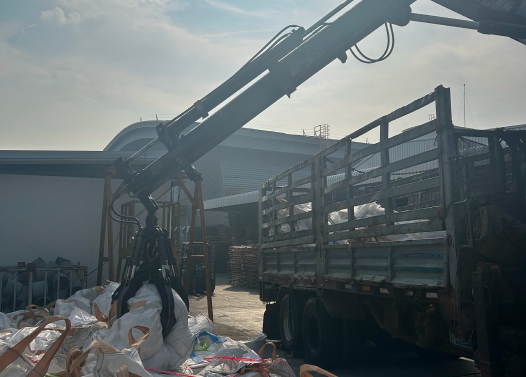
Waste-related data covers production activities and supporting operational activities within the Company’s factory operations.
Data Sources
- CERO/ERP System (production data and process waste data)
- Annual waste scrap reports for 2023–2025 (internally certified documents)
- Hazardous waste disposal records (3-year records)
- Annual scrap material sales reports
Units and Calculation Methodology
Data are reported in tons (t). Waste intensity indicators are calculated based on the ratio of waste volume to total production volume in each year in order to enable appropriate comparison of performance results across reporting periods.
Quantitative Performance Results
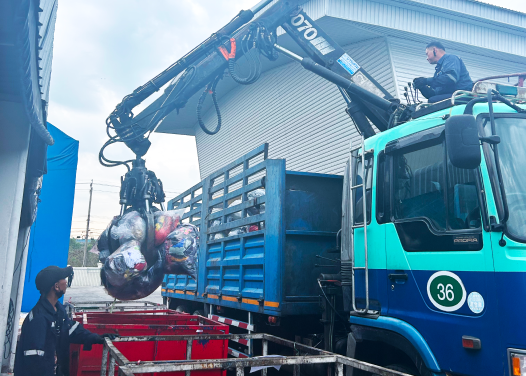
The Company monitors and evaluates its waste management performance using quantitative data and intensity indicators to reflect operational efficiency relative to production levels in each year. Reporting comparative data over a three-year period enables the analysis of waste generation trends, waste management structures, and the effectiveness of the waste reduction measures continuously implemented by the Company. Such quantitative information is presented together with tables and graphs to ensure that stakeholders can clearly understand the Company’s performance in a transparent and traceable manner.
The Company’s waste management performance can be categorized into four main dimensions: The Company’s waste management performance can be categorized into four main dimensions: (1) Process Waste, (2) Hazardous Waste Directed to Disposal, (3) Non-hazardous Waste Diverted from Disposal, and (4) Non-hazardous Waste Directed to Disposal or Final Treatment, the details of which are presented as follows.
1. Production Volume and Process Waste
The Company monitors total production volume and process waste generated across all departments through the CERO/ERP system and calculates the Process Waste Intensity as presented in the table below.
Table 1: Production Volume and Process Waste
| Year | Total Production Volume (tons) | Process Waste (tons) | Process Waste Intensity (t/t) |
|---|---|---|---|
| 2023 | 37,274.695 | 629.357 | 0.016884 |
| 2024 | 36,371.161 | 568.949 | 0.015643 |
| 2025 | 35,925.046 | 552.750 | 0.015386 |
2. Hazardous Waste Directed to Disposal
Table 2: Hazardous Waste Directed to Disposal
| Year | Hazardous Waste Directed to Disposal (tons) | Hazardous Disposal Intensity (t/t) |
|---|---|---|
| 2023* | 2024 | 2025 |
| 19.50 | 23.665 | 30.955 |
| 0.000523 | 0.000651 | 0.000861 |
The Company exercises strict control over hazardous waste management in compliance with applicable laws and regulations. The volume and intensity of hazardous waste directed to disposal reflect the Company’s systematic approach to environmental risk management.
3. Non-hazardous Waste Flow
Table 3: Non-hazardous Waste Flow
| Year | Internal Recycling (Internal Reprocessed Scrap) |
External Recycling (Export/Sale for Recycling) |
Diverted from Disposal (Total Recycled) |
Directed to Disposal |
|---|---|---|---|---|
| 2023 | 1,573.138 | 1,379.174 | 2,952.312 | 1.439 |
| 2024 | 1,476.101 | 1,737.280 | 3,213.381 | 6.978 |
| 2025 | 1,488.399 | 1,823.214 | 3,311.613 | 34.310 |
The above table and graph demonstrate that the majority of non-hazardous waste was diverted for recovery and reuse, while the proportion of waste directed to final disposal remained relatively low.
4. Non-hazardous Waste Intensity
Table 4: Non-hazardous Waste Intensity
| Year | Diverted from Disposal (t/t) | Directed to Disposal (t/t) |
|---|---|---|
| 2023 | 0.079204 | 0.000039 |
| 2024 | 0.088350 | 0.000192 |
| 2025 | 0.092181 | 0.000955 |
Summary of Waste Management Performance
Based on quantitative data and a three-year performance trend analysis, the Company has demonstrated a systematic and effective waste management approach. The Process Waste Intensity has shown a continuous declining trend, reflecting tangible improvements in production processes and quality control measures.
With respect to non-hazardous waste, the Company prioritizes waste recovery and reuse through internal reprocessing within the factory and external recycling through export or sale for recycling purposes. As a result, the proportion of waste directed to final disposal or treatment remains low relative to the total waste generated. At the same time, the Company manages hazardous waste under strict compliance with applicable laws and relevant regulations in order to control environmental, health, and safety risks.
The Company remains committed to continuously improving its waste management systems and related databases in order to enhance resource efficiency, reduce environmental impacts, and support business operations in line with the Circular Economy concept, which serves as a key foundation for long-term sustainable growth.
Governance and Continuous Improvement
The Company oversees waste management through its environmental management governance structure, with regular monitoring of performance based on quantitative data and waste intensity indicators to support decision-making and continuous operational improvement. Going forward, the Company plans to further enhance its waste management practices by focusing on reducing waste generated from production processes and increasing the proportion of waste diverted for recovery and reuse. The Company will also continue improving the completeness and reliability of related data to support ESG disclosures and assessments by stakeholders and international sustainability indices.
The Company recognizes the significance of global warming and greenhouse gas (GHG) emissions, which are primarily caused by carbon dioxide emissions and contribute to climate change, rising global surface temperatures, and increasingly severe natural disasters. These impacts directly affect the quality of life and well-being of people worldwide.
The Company has established policies and measures relating to greenhouse gas emissions management by referencing the Thailand Voluntary Emission Reduction Program (T-VER), which promotes participation from all sectors in reducing greenhouse gas emissions. In addition, the Company has formulated greenhouse gas management strategies focusing on improving energy efficiency, increasing the use of renewable energy, selecting high-efficiency machinery and equipment, and promoting organizational and product carbon footprint initiatives.
ในด้านมาตรการสำคัญ บริษัทได้ดำเนินการ (1) เลือกใช้เครื่องจักร เครื่องมือ และอุปกรณ์ที่มีประสิทธิภาพสูง เพื่อลดการใช้พลังงานไฟฟ้า แม้จะมีต้นทุนการลงทุนเริ่มต้นที่สูงขึ้น แต่ช่วยยกระดับคุณภาพการให้บริการและสอดคล้องกับกลยุทธ์การให้บริการที่มีมาตรฐานสูง และ (2) ตั้งเป้าหมายการลดการปล่อยก๊าซเรือนกระจกโดยอ้างอิงแนวทางของ Science Based Targets initiative (SBTi) ในระยะยาว
As part of its key initiatives, the Company has implemented: (1) the adoption of high-efficiency machinery, tools, and equipment to reduce electricity consumption. Although these investments involve higher initial costs, they enhance service quality and align with the Company’s strategy of maintaining high operational standards; and (2) the establishment of long-term greenhouse gas reduction targets based on the Science Based Targets initiative (SBTi) framework.
The Company prepared its Carbon Footprint for Organization (CFO) reports for 2024 and 2025 in accordance with the standards of the Thailand Greenhouse Gas Management Organization (Public Organization). The assessment covers factory operations, raw material warehouses, finished goods warehouses, and office facilities, including direct greenhouse gas emissions (Scope 1), indirect emissions from energy consumption (Scope 2), and other indirect emissions (Scope 3), as well as refrigerant leakage emissions. The reports were verified by an independent third party, ECEE Co., Ltd.
The assessment results indicated that the Company’s total greenhouse gas emissions amounted to 108,455 tons of carbon dioxide equivalent in 2024 and increased to 115,269 tons of carbon dioxide equivalent in 2025. The primary source of emissions was indirect emissions under Scope 3, mainly associated with plastic resin raw materials, followed by electricity consumption. This reflects the nature of the industry and the structure of the Company’s supply chain.
These initiatives reflect the Company’s concrete commitment to mitigating climate change impacts and supporting sustainable long-term business operations. The greenhouse gas emissions assessment results for 2025 can be summarized as follows.
Summary of Greenhouse Gas Emissions Assessment for 2025
| Greenhouse Gas Emission Sources | Greenhouse Gas Emissions (TonCO2e) | |
|---|---|---|
| 1 | Mobile Combustion - Diesel consumption for vehicles - Gasoline consumption for vehicles - LPG consumption for vehicles |
559.11 81.69 184.87 |
| Stationary Combustion - Gasoline consumption for lawn mowers - Diesel consumption for fire pumps - LPG consumption for cooking |
0.06 0.60 3.63 |
|
| Greenhouse Gas Leakage - CO₂ refill for fire extinguishers - Methane leakage from septic tanks - Methane leakage from aerated treatment ponds |
0.09 23.54 - |
|
| Refrigerant Leakage - Leakage of refrigerant R32 - Leakage of refrigerant R410A - Leakage of refrigerant R407C - Leakage of refrigerant R134A |
0.27 71.28 83.16 - |
|
| Total Direct Greenhouse Gas Emissions (rounded) | 1,009.00 | |
| 2 | Electricity Consumption | 13,192.86 |
| Total Indirect Greenhouse Gas Emissions from Energy Consumption (rounded) | 13,192.86 | |
| 3 | Indirect greenhouse gas emissions from purchased raw materials Indirect greenhouse gas emissions from end-of-life treatment of products |
89,313.13 11,753.59 |
| Total Other Indirect Greenhouse Gas Emissions (rounded) | 101,067.00 | |
| Total Greenhouse Gas Emissions (Scope 1–3) | 115,269.00 | |
| Others | Leakage of refrigerant R22 | 23.65 |
| Grand Total (rounded) | 115,293.00 |
Pollution Control and Environmental Quality Management
The Company places significant importance on controlling and reducing air pollutant emissions from its production processes in accordance with the Green Industry policy of the Department of Industrial Works, which encourages industrial operators to control pollutant emissions at levels exceeding legal compliance requirements. Accordingly, the Company focuses on reducing fuel combustion and controlling significant air pollutant emissions to remain appropriately below the legal standard limits.
In its operations, the Company has continuously developed and improved air pollution control measures, including the design and installation of plastic dust collection systems within the production process, as well as redesigning and reducing the size of ink trays and installing optimized ink tray systems to reduce the amount of ink used in each production cycle. These measures effectively reduce solvent evaporation and minimize air pollution generated from production processes.
The Company regularly monitors the quality of air emissions discharged outside the factory premises. The latest air quality monitoring results, conducted on 21 November 2025, are summarized as follows.
Air Emission Quality Monitoring Results Outside the Factory Premises
| Monitoring Point | Parameter Monitored | Unit | Monitoring Result | Standard Value 1/ | Evaluation Result |
|---|---|---|---|---|---|
| Stack | Total suspended particulate | mg/m3 | 2 | 400 | Passed |
| PT-01 | Isopropyl Alcohol | mg/m3 | 169.31 | Not specified | - |
| Toluene | mg/m3 | 529.6 | Not specified | - | |
| Ethyl acetate | mg/m3 | 96.02 | Not specified | - | |
| Total suspended particulate | mg/m3 | 1.3 | 400 | Passed |
Based on the monitoring results, all regulated air pollutant parameters were found to comply with the applicable legal standards. Furthermore, assessments of air pollution sources indicated that the Company’s production processes do not generate significant emissions of nitrogen oxides (NOx) and sulfur oxides (SOx) in accordance with relevant legal and regulatory requirements. Therefore, the Company primarily focuses on controlling actual air pollutants generated from its production processes. This reflects the effectiveness of the Company’s air pollution control measures and its commitment to responsible environmental management.
Innovation in Manufacturing Processes and Environmentally Friendly Products
The Company places significant importance on the development of environmentally friendly manufacturing innovations and products at every stage, ranging from production process design and raw material selection to finished product development. The objective is to improve resource efficiency, reduce waste generation, and support packaging design that considers environmental impacts throughout the product life cycle.
The Company’s production operations are aligned with the Circular Economy concept and the 4R principles: Reduce, Reuse, Recycle, and Repair. The Company focuses on reducing raw material consumption per unit of production, reusing resources within manufacturing processes, and developing products that can be effectively recycled or properly managed at the end of their life cycle.
In terms of manufacturing process innovation, the Company has adopted advanced technologies to improve efficiency and reduce environmental impacts. One example is Machine Direction Orientation (MDO) technology for the production of specialty films, which enhances film strength without increasing film thickness, thereby significantly reducing raw material consumption per production unit. This technology has been applied in the production of MDO PE Film and MDO Breathable Film for the food packaging, hygiene product, and medical device industries, while maintaining product safety and quality standards.
In addition, the Company places emphasis on the development of Mono-material Solutions to improve recyclability, reduce material structure complexity, and support effective post-consumer waste management. For example, MDO PE film is used as a print layer together with LLDPE film as a sealant layer, reducing reliance on multiple materials such as PET or Nylon in certain applications while maintaining appropriate strength and barrier properties.
To support packaging applications requiring medium- to high-level moisture and oxygen barrier properties, the Company has adopted Vacuum Metallizing technology to coat aluminum onto film surfaces under vacuum conditions. This process uses a lower quantity of aluminum compared to conventional aluminum foil while maintaining suitable barrier performance, thereby reducing resource consumption and supporting more environmentally friendly packaging design.
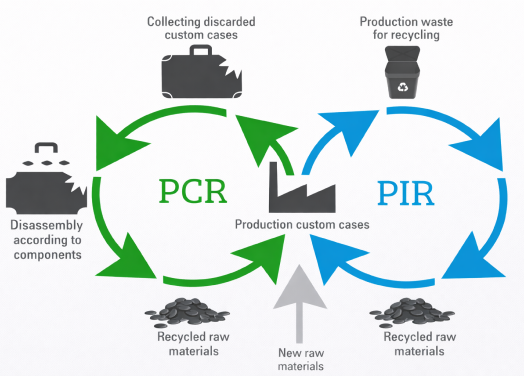
The Company has also implemented Inline Recycling and Trim Recycling Systems within its manufacturing processes to recycle scrap materials generated during production and immediately reuse them within the production line. In addition, the Company utilizes Post-Industrial Recycled (PIR) and Post-Consumer Recycled (PCR) plastic resins in the production of certain packaging products, helping reduce virgin material consumption and minimizing waste sent for disposal.
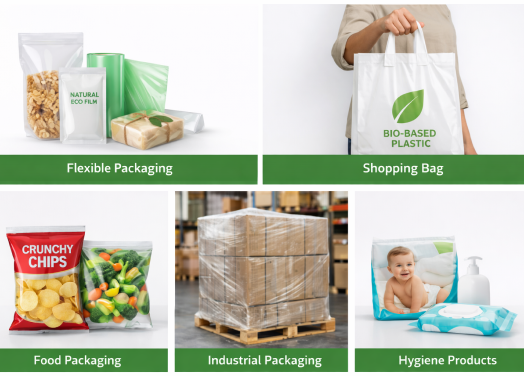
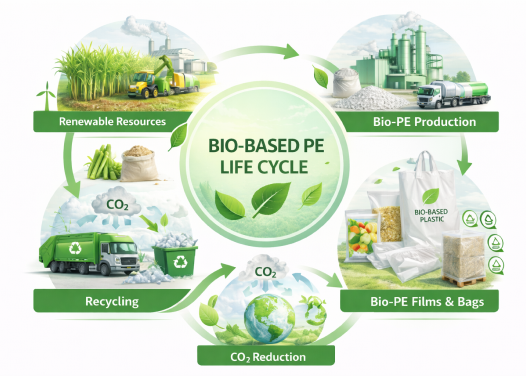
In product development, the Company has designed and developed a wide range of environmentally friendly packaging products covering consumer packaging, industrial packaging, and specialty packaging applications. These products emphasize sustainability-related features, such as 100% recyclable packaging, bio-based packaging materials including Bio-PE, as well as biodegradable bags and films (Bio Compostable Bag & Film) that can naturally decompose without leaving microplastic residues.
Furthermore, the Company has developed Specialty and Innovation Products to enhance product performance and reduce environmental impacts. Examples include Easy Peel and Easy Tear films that reduce product loss during opening, Shrink Films that reduce packaging material consumption per unit, Anti-fog films and Keep-it-Fresh films that help extend the shelf life of fruits and vegetables and reduce food waste throughout the supply chain, as well as films designed for UV Laser printing systems that do not require chemicals and do not generate volatile organic compound (VOC) emissions.
The development of these manufacturing and product innovations reflects the Company’s commitment to balancing customer needs, business efficiency, and environmental responsibility. The Company will continue to develop manufacturing technologies and products that align with its sustainability goals and long-term growth strategy.
Development of Environmentally Friendly Products (Eco Products)
The Company places importance on the development of environmentally friendly products in order to respond to customer demand and support sustainable resource utilization. Currently, the Company classifies Eco Products based on the following criteria:
- Products using 100% recyclable packaging.
- Products incorporating Post-Consumer Recycled (PCR) and Post-Industrial Recycled (PIR) materials.
- Products using bio-based and biodegradable materials (Bio Compostable Materials).
During 2023–2025, the Company demonstrated continuous growth in sales of environmentally friendly products. In 2023, Eco Product sales amounted to THB 29.33 million, representing 1.01% of total sales. In 2024, Eco Product sales increased to THB 44.12 million, accounting for 1.42% of total sales. In 2025, Eco Product sales increased significantly to THB 74.22 million, representing 2.47% of total sales.
The increasing proportion of Eco Product sales reflects the Company’s commitment to developing products that reduce environmental impacts, while also responding to market trends and growing customer demand for sustainability-oriented products. The Company remains committed to continuously developing environmentally friendly products and solutions in order to achieve business growth alongside long-term social and environmental responsibility.
Environmental Sustainability Activities with Stakeholders
Unique Plastic Industry Public Company Limited places importance on stakeholder participation in the conservation of natural resources and the environment alongside its business operations. The Company focuses on implementing environmental activities that create positive impacts on ecosystems, society, and communities connected to the Company’s operations.
In 2025, the Company collaborated with government agencies, local communities, educational institutions, and volunteer groups to continuously carry out marine ecosystem and natural water resource conservation and restoration activities. One such initiative was the “Volunteer Gathering for Coastal and Marine Conservation” activity, organized in collaboration with Royal Volunteer groups in Phraeksa Subdistrict, Mueang District, Samut Prakan Province. A total of 42 executives and employees participated in the activity, which included the planting of 3,000 mangrove trees and the collection of more than 150 kilograms of marine waste at Khlong Khon, Samut Songkhram Province. These activities contributed to coastal ecosystem restoration, erosion prevention, and the enhancement of long-term marine resource abundance.
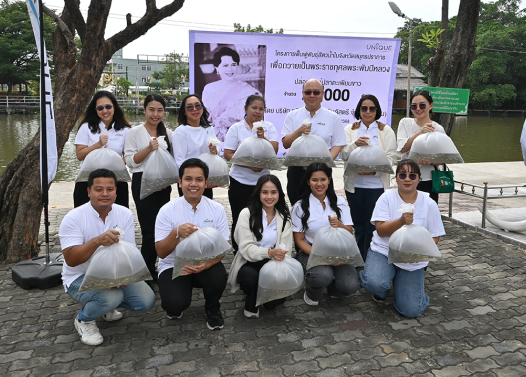
In addition, the Company organized the activity “Releasing Fish into Natural Water Sources as a Royal Merit-Making Initiative,” during which executives and the Unique volunteer group released 20,000 silver barb fish into the water at Bang Chalong Nok Temple Pier. The activity aimed to restore the ecological balance of natural water resources and promote biodiversity, while also reflecting the Company’s commitment to contributing sustainably to society and the environment.
The Company also places importance on promoting environmental awareness among youth and local communities through the “Volunteer Brothers and Sisters Mangrove Reforestation” activity, organized together with students from Chalermmaneechai Wittayakarn School at the Army Nature Study Center and Recreation Area in Samut Prakan Province. This activity supported experiential learning outside the classroom, fostered environmental conservation awareness, and provided youth with opportunities to participate directly in coastal ecosystem restoration.
These environmental activities conducted in collaboration with stakeholders form part of the Company’s environmental sustainability management approach, which emphasizes cooperation, participation, and the creation of shared value among the organization, communities, and society. The Company believes that collective efforts from all sectors, even small contributions, can lead to positive change and the sustainable conservation of natural resources in the long term.

Summary of Environmental Performance
The Company’s environmental performance is driven under a clear policy framework, oversight by the Board of Directors, and a verifiable management system. The Company’s environmental management covers resource utilization, pollution control, waste management, and greenhouse gas emission reduction throughout the value chain. The Company remains committed to continuously improving its environmental practices in order to support business growth alongside the creation of long-term value for society and the environment.